It started with a contradiction in the numbers.
Years before SheFound existed, our founder Vanessa Kisowile was already training women in technology and business — and later, working at the heart of East Africa's innovation scene, helping run some of the region's largest entrepreneurship and technology platforms.
From that vantage point, two facts refused to sit together. The data said women are most of the story: across Africa, more than half of small and medium businesses are owned or led by women — the highest rate of women's entrepreneurship in the world. But on the stages, in the funding rounds, and in the growth statistics, that majority all but vanished. The businesses were real. The track record was invisible. And capital doesn't flow to what it cannot see.
The second fact made the first one impossible to ignore: when a woman's business grows, the gains don't stop with her. Research across the continent shows women reinvest the majority of their income back into their families and communities — education, health, the next generation. Even among women building technology companies, the pattern holds: the businesses women design are overwhelmingly built to solve real social problems, profitably.
Put those two truths together and the conclusion is not a women's cause — it's an economic strategy. If you want a continent's economy to rise, equip the people running half its businesses and reinvesting most of what they earn. The tide rises; every ship lifts.
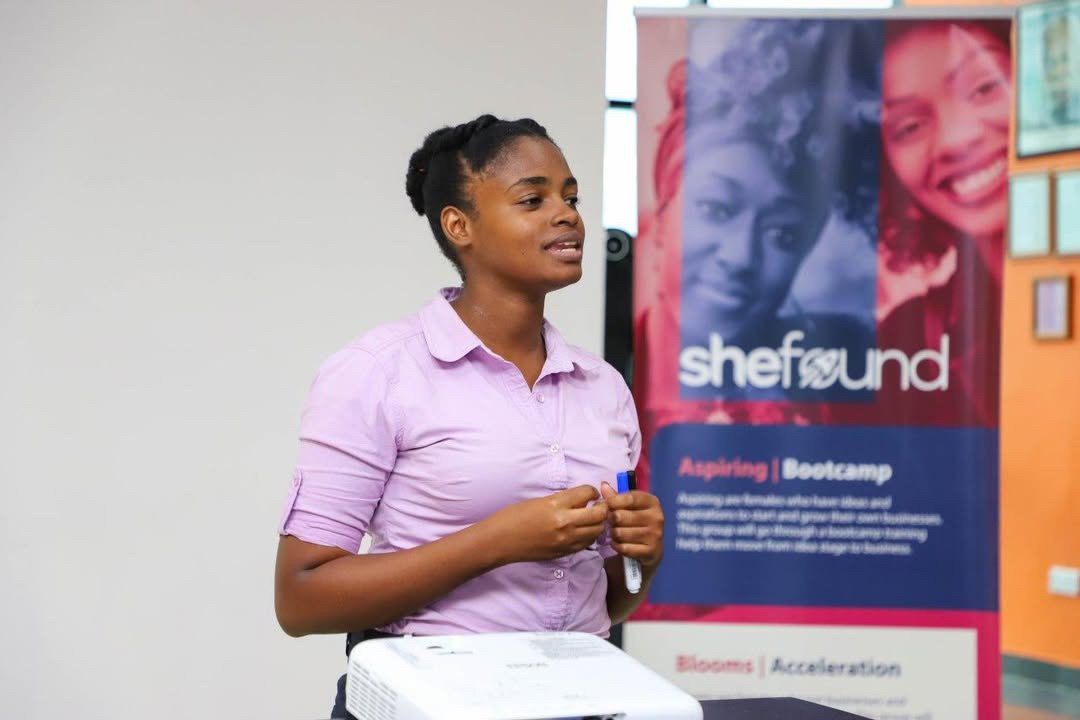
So in 2019, Vanessa asked a different question: what if someone built the full pathway — from a woman's first customer to her first investment — and made the track record visible along the way? That year, SheFound launched the Aspire Incubator, the Bloom Accelerator, and the first Female Founders Marketplace.
What we've learned since shaped what SheFound is today: training alone doesn't change who gets funded. Visibility alone doesn't either. What changes outcomes is the full journey — building, verifying, developing, connecting, and proving — walked alongside the woman herself. No one in our ecosystem was doing all of it. So we became the ones who do.